Section B: The Important Sign of Israel and Jerusalem
The restoration of Israel is a very important sign that the last days of the church dispensation have dawned. In His Olivet Discourse, the Lord Jesus said that the times of the Gentiles (i.e. the time of world evangelisation) would last as long as the time of the treading down of Jerusalem by the Gentiles continues (Luke 21:24). The physical restoration of Israel in 1948, the recapturing of biblical Jerusalem (the Old City) in 1967, as well as the political restoration of Jerusalem as Israel’s capital in 1980, are important prophetic landmarks which indicate the approaching end of the church age.
However, there is another, more important aspect of Israel’s restoration that should not be overlooked, and that is their spiritual revival. The fig tree (Israel) should not only bud and come to new life in the land of Israel but this tree should also, during the coming summer of God’s kingdom, bear fruit as Israel fulfil their Messianic calling. That can only happen after they have all been reconciled with the Messiah (Jer. 31:34). The more the Messianic movement spreads among the Jews the closer they will come to the realisation of this ideal.
Israel and their capital city, Jerusalem, is the focal point of end-time events as it is to this city and this people that the Messiah will return to establish His reign of peace on earth. It is our duty to pray for the peace of Jerusalem, but that will only happen when the Prince of Peace rules from the throne of David. We are called upon to support Israel while constantly praying that the Lord establishes Jerusalem and makes it a praise in the earth (Isa. 62:6-7).
The best way of promoting Israel’s spiritual revival is to prove to them, from the fulfilment of Old Testament prophecies, that Jesus is the promised Messiah. This message can very effectively be conveyed to them from the perspective of Israel’s annual festivals, since the Messiah is historically and prophetically the central theme of these feasts.
7. The Spiritual Birth of a Nation
There is great anticipation for the time when Israel as a people will be reconciled to the Messiah as that event will mark the formal conclusion of the times of the Gentiles, which elapses between Israel’s Babylonian captivity and the end of the Antichrist’s reign. During this entire period there was no king who ruled on the throne of David. After Israel’s spiritual awakening, their kingdom will be restored by the Messiah Himself. That event will introduce a period in world history when the earth shall be full of the knowledge of the Lord as the waters cover the sea (Isa. 11:9). Any study on Israel’s end-time restoration should therefore focus on their political restoration as well as their subsequent spiritual awakening. The Messiah will be their Saviour and King.
Israel’s present settlement in the land of their fathers is only a preparatory step towards their spiritual restoration when, in the true sense of the word, they will become God’s people. Their hearts must be circumcised and that can only be done by the Messiah through the work of the Holy Spirit (Rom. 2:28-29). That is exactly what will happen when Jesus returns, sets foot on the Mount of Olives and again presents Himself to the Jewish people as their Saviour from heaven. This time it will be with absolute positive results as all surviving Jews will, with broken hearts, look up to Him for mercy and salvation, while fully embracing Him as Messiah and King (Zech. 12:10).
When Jesus was rejected by Israel and their spiritual leaders during His first coming, He knew that it was not the end of His relationship with Israel as a people, and that is why He said to them: “You shall see Me no more till you say, Blessed is He who comes in the name of the Lord!” (Matt. 23:39). This second meeting is rapidly approaching, and it will have the great significance of spiritually transforming Israel into a people worthy to inherit the promised Messianic kingdom in which they will all be servants of the Messiah.
Within every generation of Jews since the first coming of Jesus there was a small remnant of people in Israel who were reconciled with the Messiah and maintained a relationship with Him. However, the exile of the nation continued because of the unbelief of the majority. During Israel’s restoration in 1948, the spiritual condition of the nation was still unchanged. Messianic believers are despised by the majority of orthodox Jews because they do not relate their salvation to Torah observance but are instead “followers of the God of the Gentiles.” In spite of their negative treatment, the numbers of Messianic Jews are dramatically increasing. In their very existence we can see the beginning of Israel’s spiritual awakening. This is a very important eschatological development as this group is an early indication of what the entire nation will become in future.
Messianic Jews often call themselves “completed Jews” and have no inclination to be disloyal towards their nation. To the contrary, they have a profound love for their own people and are deeply concerned about the spiritual blindness of the majority. A completed Jew is a Jew who has met the Messiah, the hope of Israel, and dedicated his life to Him – he is a Messianic Jew. In his testimony, A completed Jew, Jeff Miller says: “I accepted Jesus into my life and He completed me” (www.precious-testimonies.com/BornAgain).
In an article on Messianic Judaism, Wikipedia says: “Messianic Judaism states that Jesus is not merely a man, but the Jewish Messiah and ‘God the Son’ (one person of the Trinity), and that salvation is only achieved through acceptance of Jesus as one’s Saviour. Any Jewish laws or customs that are followed are cultural and do not contribute to attaining salvation.”
However, orthodox Jews regard a “completed Jew” in the Messianic movement as a “lost Jew” because he confesses a Messiah who is not recognised by them, and also because he no longer finds his salvation in law observance. Consequently, the modern Jewish disciples of the Messiah experience just as much opposition from orthodox Jews as was the case with the first century disciples.
The Messianic movement is statistically small compared to the great majority of orthodox and agnostic (non-practising) Jews, but they are making good progress and are rapidly expanding. There are various large, international missionary organisations, as well as co-ordinating bodies for Messianic congregations, of which a few of the important ones are mentioned below. They introduce themselves as follows, and on some of their websites more information may be found on the testimonies of Messianic Jews:
Caspari Centre for Biblical and Jewish Studies (www.caspari.com)
“Caspari Centre is a network of people: Jews and Gentiles throughout the world working together to raise awareness of Jewish believers in Jesus and support the growth of Israel’s congregations. Our passion is to support emerging leaders who will transform Israel by developing and leading mature, confident and visionary Messianic communities. ... For a number of years we have been praying for new premises for our centre in Jerusalem. We have now moved in to our new premises at 55 HaNevi’im (Prophets) St. in Jerusalem. ... The book Jewish Believers in Jesus: The Early Centuries, is the first in a series edited by Caspari Centre. It examines the first five centuries of Christian history as experienced by individuals who were ethnically Jewish, but who professed faith in Jesus Christ as the Messiah.”
Union of Messianic Jewish Congregations (www.umjc.net)
This organisation issued the following statement of faith:
1. We believe the Bible is the inspired, the only infallible, authoritative Word of G-d.
2. We believe that there is one G-d, eternally existent in three persons, Father, Son and Holy Spirit.
3. We believe in the deity of the L-RD Yeshua, the Messiah, in His virgin birth, in His sinless life, in His miracles, in His vicarious and atoning death through His shed blood, in His bodily resurrection, in His ascension to the right hand of the Father, and in His personal return in power and glory.
4. We believe that for the salvation of lost and sinful man, regeneration by the Holy Spirit is absolutely essential.
5. We believe in the present ministry of the Holy Spirit by whose indwelling the believer is enabled to live a godly life.
6. We believe in the resurrection of both the saved and the lost; they that are saved unto the resurrection of life, and they that are lost unto the resurrection of damnation.
7. We believe in the spiritual unity of all believers in the L-RD Yeshua, the Messiah.
8. We believe in the process of discipline and conflict resolution taught in Matthew 18:15ff, as applicable to all congregants and leaders.
9. As Jewish followers of Yeshua, we are called to maintain our Jewish biblical heritage and remain a part of our people Israel and the universal body of believers. This is part of our identity and a witness to the faithfulness of G-d.”
British Messianic Jewish Alliance (www.bmja.net)
“It is with great concern that we witness the rapid growth of worldwide anti-Semitism, all too often these days in the guise of anti-Zionism. We wish to express our concern that anti-Jewish sentiment is so frequently manifested in British society. We call upon the church to oppose it. As Jews who are part of the church we are distressed to hear anti-Jewish attitudes expressed in the church and in the name of Christianity. We call upon our fellow believers from many nations to acknowledge that Jesus was a Jew, and to disavow all racism aimed at Jewish people both inside and outside the State of Israel. We call upon the church to publicly affirm God’s ongoing relationship with the Jewish people, and His determination to continue to work with them since He has not cast them away. Even more unthinkable [and insulting] would be the idea that a Covenant God should ditch His first choice in favour of another. When we hear people in the churches suggesting that God’s promises to us are null and void we are concerned, not just for what that says about us, but also for what it says about God, as if He were fickle. Our very existence into the 21st century speaks for itself. We are part of a large, diverse and vibrant Messianic Jewish movement that professes Yeshua [the name ‘Jesus’ in its Hebrew form] is Messiah, Saviour and Lord.”
The Messianic Times (www.messianictimes.com)
“The Messianic Times has become the leading international Messianic Jewish newspaper since its inception in 1990. Started as a quarterly publication, it is now published six times per year by Times of the Messiah Ministries. It includes news from the worldwide Messianic community, Israeli current events and analysis. The paper proclaims that Yeshua is the Jewish Messiah.”
Jews for Jesus (www.jewsforjesus.org)
On this organisation’s website they make the following statements on their call to proclaim the gospel among Jews, as well as the problems encountered while doing so:
“Jewish people tend to dismiss evangelistic methods and materials that are couched in Christian presuppositions and lingo, because they reinforce the assumption that Jesus is for ‘them’ not ‘us’. In order to get beyond that assumption, we have to be innovative. We place full-page gospel proclamations as paid ads in leading newspapers and magazines such as Newsweek, Parade, and The New York Times. We also broadcast evangelistic messages on billboards, in commuter trains, in bus transit shelters and on secular radio stations. Others have begun using some of these avenues to an extent, but Jews for Jesus have been on the cutting edge of making the messiahship of Jesus an unavoidable issue to Jewish people via the secular media. We also conduct special witnessing campaigns during the summer months in New York City, Toronto, Paris, London, Moscow and various other cities throughout the former Soviet Union.
“It is difficult, even as a Jewish mission, to keep the focus on sharing Christ with the unsaved. Jewish evangelism is difficult. Jewish people have a long-standing tradition of unbelief, and often view with contempt those who seek to share the gospel. The discomfort of being vulnerable and the pain of rejection that necessarily accompany effective missionary work can take their toll if not handled properly. If we don’t keep that vulnerability, that pain, in perspective, the natural desire to avoid them can slowly erode any commitment to direct evangelism.
“A second difficulty in maintaining the focus on evangelism is the fact that there are so many distractions. Whether it be leading tours to the Holy Land, conducting prophecy conferences or attempting to win support for the state of Israel, there are many worthy endeavours that simply do not add up to Jewish evangelism. No Jewish mission can afford to take on these endeavours at the price of neglecting to speak directly to the unsaved. That is why you will find us Jews for Jesus out on the streets and on college campuses handing out our gospel tracts. That is why you will find us calling on the telephone and meeting in person with unsaved Jewish people. It is all part of our Jews for Jesus commitment to remain visible, vulnerable and available as we maintain direct Jewish evangelism as our priority.”
Trumpet of Salvation. (www.trumpetofsalvation.com). “With the new birth of Jacob Damkani also came a calling to proclaim Yeshua to the lost sheep of the house of Israel, no matter what the cost. Distributing tracts he printed himself, he evangelized in the streets of Israel despite the resistance of his family and the hostilities of many orthodox Jews. In 1984, Trumpet of Salvation to Israel was founded. Since then Jacob has dedicated his life full time to this calling. The autobiography of Jacob Damkani, Lama Davka Ani? (Why Me?), has helped many Israelis come to faith in Yeshua and also many Christians to understand the origin of their faith. Available in Hebrew, Russian, Dutch, English, Finnish, French, German, Hungarian, Italian, Korean, Portuguese, Spanish and Swedish.”
The beginning of the nation’s spiritual revival
The end-time Messianic movement in the world is closely associated with the restoration of the Jewish state and has a strong prophetic expectation on the second coming of the Messiah. Some of the Messianic Jews move to Israel, while others send their children to work on kibbutzim, serve in the IDF or to do secular work in Israel. They are conscious of the Lord’s plan with the restoration of His people in their land, i.e. Israel’s spiritual quickening by their national reconciliation with Yeshua as Messiah.
The first phase of Israel’s restoration is physical and political, which will be followed by their spiritual awakening. The first phase is however very important as the Lord brings them back to a land which He, Himself, calls “Israel” and not “Palestine”: “Thus says the Lord God: I will gather you from the peoples, assemble you from the countries where you have been scattered, and I will give you the land of Israel” (Ezek. 11:17).
Back in their land, the Lord will bring Israel in distress until they seek their rejected Messiah, find Him, and humble themselves before Him (Ezek. 22:18-20; Jer. 30:7; Hos. 5:15). Messianic Jews do everything possible to lead their fellow-countrymen to Yeshua, in order to help them escape the doom of the lost and also the coming time of trouble for Jacob (Jer. 30:7).
These believing Jews fully accept the promise that Israel will not be destroyed during the tribulation period, but that the Lord will intervene to save a remnant of the Chosen People and then use them as His special witnesses. He will also raise two special witnesses to strongly proclaim the Messiah during the reign of the false messiah (Rev. 11:3-12). After the termination of the church age these witnesses will be commissioned to further prepare Israel on their spiritual awakening.
The witness of a marriage
In Mathew 25:1-13, a very important sign is given to end-time Israel that Jesus is the Messiah. This sign will be fulfilled at the rapture when Christ comes as the heavenly Bridegroom to secretly receive His bride and take her away. The rapture will occur during a spiritually dark time of world history when Messianic Jews as well as evangelical Christians among the Gentiles will be ridiculed and rejected because of their Bible-based belief in Jesus Christ. During that time, shortly before the tribulation period, the spirit of the Antichrist will actively deny the deity of Jesus, question His resurrection, ascension and second coming, denounce the Bible as the inspired Word of God, and also belittle promises such as the rapture.
During the first coming of Jesus there was great hostility towards Him and His small group of true disciples. He said that He would go to His Father but the disciples were afraid to remain behind alone. The night before His crucifixion the Lord Jesus made the following comforting promise about meeting them again and taking them to heaven: “Let not your heart be troubled; you believe in God, believe also in Me. In My Father’s house are many mansions; if it were not so, I would have told you. I go to prepare a place for you. And if I go and prepare a place for you, I will come again and receive you to Myself; that where I am, there you may be also” (John 14:1-3).
This promise was made after the analogy of traditional Jewish marriage customs in biblical times. The first important step in the Jewish marriage was betrothal, which comprised the conclusion of a marriage covenant. During the time of Jesus it was customary that such a covenant was concluded after the prospective bridegroom’s successful proposal of marriage. He travelled from his father’s house to the home of his bride to be where he negotiated with her father on the bride-price (mohar) which he had to pay. After the bride-price was paid the marriage covenant was concluded. From that moment onwards the future bride was declared to be separated and dedicated only to her future bridegroom. As confirmation of the covenant they drank from a cup of new wine over which a blessing for the betrothal was declared.
The first statement that must be made from a study of this analogy, is that the sanctified church of Christ is His bride (Eph. 5:22-23). Just as the Jewish bridegroom took the initiative by leaving his father’s house to travel to the house of his bride, Jesus left His Father’s house during His first coming to the world, which is the abode of His future bride. Through His death on the cross He paid the full price to redeem His bride so she can belong to Him. Paul said to the church: “You were bought at a price” (1 Cor. 6:20), while Peter also confirmed that we were redeemed with the precious blood of Christ (1 Pet. 1:18-19).
During the same night when Jesus made the promise to the early disciples that He was going to prepare a place for us, He instituted Holy Communion. He passed the cup of wine to His disciples with the words: “This cup is the new covenant in My blood” (1 Cor. 11:25). That was a confirmation of the eternal bond that we have with Him through His death on the cross.
As the Jewish bride was declared to be holy and solely dedicated to her bridegroom, we also have an obligation to appear before Christ holy and without blemish. Paul says that our hearts must be “blameless in holiness before our God and Father at the coming of our Lord Jesus Christ” (1 Thess. 3:13), and further explains the need for sanctification: “... Christ also loved the church and gave Himself for it, that He might sanctify and cleanse it ... that He might present it to Himself a glorious church, not having spot or wrinkle or any such thing, but that it should be holy and without blemish” (Eph. 5:25-27).
After concluding the marriage contract, the bridegroom returned to his father’s house where he stayed for about a year to prepare a place for his bride and himself. During that time he didn’t see his bride and she kept herself busy with making a wedding garment and collecting necessities for married life.
At the end of the year of seclusion the Jewish bridegroom fetched his bride to come and stay with him. She knew more or less when the time was ripe, but not the exact day when he would come. He usually came at night as it was a secret meeting between him and her. She went out on the road to meet him, and on this occasion he didn’t show himself to the rest of her family members. His arrival was preceded by a shout, which was the good tiding that the bridegroom had come for his bride (Matt. 25:6). By then it was too late to make further preparations for the coming of the bridegroom.
In a similar way, the heavenly Bridegroom will secretly come for His bride at the end of the church dispensation. He will meet her outside planet earth in the air, and on this occasion He will definitely not reveal Himself to the rest of the world. His coming will also be announced by a shout: “For the Lord Himself will descend from heaven with a shout, the voice of an archangel, and with the trumpet of God. And the dead in Christ will rise first. Then we who are alive and remain shall be caught up together with them in the clouds to meet the Lord in the air. And thus we shall always be with the Lord. Therefore comfort one another with these words” (1 Thess. 4:16-18).
The next morning when the family members of the bride discovered that she and her friends were gone, they knew that the bridegroom had taken them away during the night. As a separate group the family members then departed to the house of the bridegroom to attend the marriage feast.
The moment when Messianic Jews suddenly disappear at the rapture, together with all the other members of the bridal congregation of Jesus, many of the Jews who remain behind will know that the heavenly bridegroom has taken them away to be with Him. That will provide strong evidence to them that Jesus is the Messiah of Israel and Saviour of the world, and because of that realisation, there will be a great spiritual awakening in Israel in which 144 000 Jews will be saved shortly after the rapture (Rev. 7:1-8). However, the majority of the nation will still be spiritually blinded and conclude a covenant with the false messiah to become members of his false bride of deceived worshippers (Rev. 17:3).
The same shocking discovery of the sudden disappearance of evangelical Christians will also be made elsewhere in the world, where it will be obvious that some people have vanished without a trace from their homes or places of employment (Matt. 24:40-42; Luke 17:34-36). There will be only one biblical explanation for this phenomenon, and that is that the heavenly Bridegroom has taken His bride away from planet earth!
When the Jewish bridegroom and his companions arrived at his father’s house, his bride was still veiled and he took her to the bridal room (“huppah”) where they spent seven days alone to consummate the marriage. In the meantime, the guests started arriving to celebrate the consummation of the marriage. After the seven days the bridegroom introduced his bride unveiled to the guests so that all of them could see her. That wonderful scene was followed by great jubilation and festivities.
In a similar way, the Messiah will take His bride to a secluded place where the rest of the world will not be able to see her. The seven days of the “huppah” prophetically refer to a year-week, which will be the seven years between the rapture and public revelation of Jesus Christ and His bride. After the union between Christ and His bride, seven years will indeed elapse before the celebration of the marriage feast of the Lamb here on earth.
At His second coming, the Lord Jesus and His bride will be revealed to the whole world: “When Christ who is our life appears, then you also will appear with Him in glory” (Col. 3:4). After this revelation, the marriage feast of the Lamb will be celebrated on earth. The remnant of Israel, who will only be saved at the second coming of Christ, will be among the guests: “Let us be glad and rejoice and give Him glory, for the marriage of the Lamb has come, and His wife has made herself ready. And to her it was granted to be arrayed in fine linen, clean and bright, for the fine linen is the righteous acts of the saints” (Rev. 19:7-8). As the bride of the Lamb she will appear before Him in a spotless robe.
The 144 000 sealed ones
The conversion of 144 000 Jews and their dedication to the service of the Lord will be a very important event at the beginning of the tribulation period, just after the revelation of the Antichrist. The 144 000 will be the first group which will represent the ongoing spiritual restoration of Israel as a people: “And I heard the number of those who were sealed. One hundred and forty-four thousand of all the tribes of the children of Israel were sealed” (Rev. 7:4).
There is nothing vague about this statement and it is completely unjustifiable to identify the 144 000 Jewish evangelists as the church, or as any other group of people outside Israel. In this chapter, no use is made of symbolic language. The twelve tribes of Israel constitute a well-known historical nation; consequently, the term Israel is not a symbol or allegorical description of the church or any non-Jewish group.
Likewise, the number 144 000 is not symbolic, but literal. Its components are not 3 X 4 X 12 X 1 000 as is sometimes alleged (3 referring to the Triune God, 4 referring to the four corners of the earth, 12 referring to the 12 apostles, and 1000 referring symbolically to any large group of people), but its components are 12 000 X 12: it is 12 000 people from each of the 12 tribes of the children of Israel. According to Ezekiel 48, the Promised Land – which is much bigger than the present Israel – will be subdivided and allocated to the twelve tribes during the millennial reign of the Messiah.
From a dispensational point of view it is quite obvious why the 144 000 Jews will be saved and dedicated to the service of the Lord. After the Lord Jesus removes His church, which He commissioned to be the light of the world during the present dispensation, He will utilise the spiritual potential of Israel to make His light shine in the dark night of the tribulation period. When Elijah was caught up to heaven, his mantle and prophetic ministry fell upon Elisha. Likewise, after the rapture of the church, the Lord will find a substitute in the Messianic Jews to be His witnesses during the reign of the Antichrist.
Revelation 7:1-8 ties up with an extensive series of prophecies in the Bible in which the guarantee is given that the Lord will not only restore Israel physically to their land, but that they will in the latter days also experience a spiritual revival: “Now therefore, thus says the Lord, the God of Israel: ... Behold, I will gather them out of all countries where I have driven them in My anger, in My fury, and in great wrath; I will bring them back to this place, and I will cause them to dwell safely. They shall be My people, and I will be their God; then I will give them one heart and one way, that they may fear Me forever, for the good of them and their children after them. And I will make an everlasting covenant with them, that I will not turn away from doing them good; but I will put My fear in their hearts so that they will not depart from Me” (Jer. 32:36-40).
Salvation of the entire remnant in Israel
The moment when the Messiah appears on planet earth, the Mount of Olives will split in two and form a big valley into which the fugitive Israelis will run and find a safe shelter against the enemy (Zech. 14:4-7). The darkness of God’s judgements will become physically manifest, just as it happened almost 2 000 years ago when God’s judgement for the sins of the world were carried by Jesus on a cross outside Jerusalem (Matt. 27:45).
Even at this critical moment, when the wrath of God is poured out over a sinful world, mercy and grace will still be offered by Jesus to those who put their faith in Him, and trust Him for salvation. When the dark clouds of judgement envelop Jerusalem and its surroundings, the remaining Jews there will flee into a place of refuge created by the sudden rupture of the Mount of Olives. There, literally at the feet of Jesus, they will be safe. Great confusion will reign among their enemies as they are overcome by divine judgement, and they will start killing one another (Zech. 14:13). The false messiah and the false prophet, the two leaders of the worldwide rebellion against God and His people, will be captured and cast alive into the lake of fire (Rev. 19:19-20).
Jesus will reach out to His people to bless them. They will be terrified when they see the marks in His hands, and their first words to Him will be: “What are these wounds in your hands?” and He will answer them: “Those with which I was wounded in the house of my friends” (Zech. 13:6). How will the Jews account for the fact that the Messiah will have wounds in His hands when He descends onto the Mount of Olives? How will they be able to explain where these wounds were inflicted on Him? It could certainly not have been in heaven! They will indeed look on Him whom they had pierced during His first coming.
Under the conviction of the Holy Spirit they will realise that the crucified Christ has come to their rescue. In a Messianic prophecy, He says: “And I will pour on the house of David and on the inhabitants of Jerusalem the Spirit of grace and supplication; then they will look on Me whom they pierced. Yes, they will mourn for Him as one mourns for his only son, and grieve for Him as one grieves for a firstborn. In that day there shall be a great mourning in Jerusalem” (Zech. 12:10-11). Their national mourning will probably last for 30 days, as was customary in Israel (Num. 20:29; Deut. 34:8).
At this moment the spiritual restoration of Israel will be complete and irreversible (Jer. 31:34). Paul says: “And so all Israel will be saved, as it is written: The Deliverer will come out of Zion and He will turn away ungodliness from Jacob” (Rom. 11:26).
Their future role
After their complete reconciliation with the Lord Jesus, Israel will be saved and ready for their future role in the Messiah’s reign, where the following conditions will prevail:
· “They [Israel] shall be Mine, says the Lord of hosts, on the day that I make them My jewels. And I will spare them as a man spares his own son who serves him” (Mal. 3:17).
· “In that day the Lord of hosts will be for a crown of glory and a diadem of beauty to the remnant of His people” (Isa. 28:5).
· “Thus says the Lord of hosts: In those days ten men from every language of the nations shall grasp the sleeve of a Jewish man, saying, Let us go with you, for we have heard that God is with you” (Zech. 8:23).
· “So you shall know that I am the Lord your God, dwelling in Zion My holy mountain. Then Jerusalem shall be holy, and no aliens shall ever pass through her again” (Joel 3:17).
· “In that day this song will be sung in the land of Judah: We have a strong city; God will appoint salvation for walls and bulwarks. Open the gates that the righteous nation which keeps the truth may enter in” (Isa. 26:1-2).
· “And in that day you will say: Praise the Lord, call upon His name; declare His deeds among the peoples, make mention that His name is exalted” (Isa. 12:4).
· “Those who come He shall cause to take root in Jacob; Israel shall blossom and bud, and fill the face of the world with fruit” (Isa. 27:6).
For obvious reasons, the great enemy of God, Israel and the church of Christ, would like to avert a situation of this nature at all cost. He will make a final effort to destroy all worshippers of God on earth, or to deceive them into accepting the wrong messiah.
8. A Demonic Strategy for the Deception of Israel
We are in various ways indebted to Israel, but mostly for their facilitating role in receiving and recording the Word of God, which was made available to us through the ministry of first generation Jewish evangelists. But the covenant people, like the Gentiles, are exposed to intensive, demonically-inspired deception in order to deprive us all from our spiritual heritage in the Messiah, Jesus Christ. All the followers of the Messiah should accept it as their highest calling: (a) to proclaim the true Gospel message with its liberating power to all nations, starting with the Jews (Rom. 1:16); and (b) to warn all people, but particularly Israel, against the devastating effects of spiritual deception.
In this chapter, the devil’s strategy for the spiritual blinding of Israel is exposed. Only the light of the true Gospel can dispel the darkness of delusion. The Messiah is full of grace and truth (John 1:14) and His Word is the only universal and timeless standard for divine truth.
The aim with deception
Spiritual deception is, during the last days of the church dispensation, a very common characteristic. One of the important reasons for this phenomenon is that, through strong delusion, the world is rapidly being prepared to accept the false Messiah in stead of the true Messiah, thereby inadvertently subjecting themselves to the false theology of the renegade kingdom of “the god of this age” (2 Cor. 4:4). Deception of this nature is proclaimed among all nations, but specifically also among the people of Israel. Erroneous thinking with regard to the person and identity of the Messiah has proved to be very popular among gullible, postmodern societies in which people have become estranged from God’s Word. All indications are that religious deception will ultimately give rise to a global movement in which virtually the whole world will follow the Antichrist in amazement and also worship him as the “saviour” of the world (Rev. 13:3-4).
Demonically-inspired deception of Jewish people is particularly intense in view of the fact that, according to the Bible, a faithful remnant of them is destined to be reconciled with the true Messiah and will subsequently play an important role as the people of God during His millennial reign of peace. The sinister purpose with this campaign of deception is that Jews should continue to reject the true Messiah, Jesus Christ, and obstinately proceed to expect another Messiah, who is Satan’s impostor.
The Lord Jesus reminded Israel of the serious implications of rejecting Him as Messiah and Saviour. Should they do so they would spiritually embark on a wrong journey which will lead to becoming followers of false prophets and false christs, and ultimately also of the false Messiah: “I have come in My Father’s name, and you do not receive Me; if another comes in his own name, him you will receive” (John 5:43).
The devil’s objective is to influence the entire Christian church to defect from the true Christ in order that, together with Israel, he may subject the whole deceived world to the authority of his false Christ (2 Cor. 11:2-4). However, in this article we will specifically investigate the deception imposed upon Israel as this nation, according to a large body of biblical promises, will play a major role in the revelation and functioning of God’s kingdom on earth. The following are the four most significant promises which will be fulfilled in the end-time with regard to Israel:
· The entire remnant of Israel will be saved when Christ returns to Jerusalem at the end of the tribulation period and set foot on the Mount of Olives (Zech. 14:4-5; Rom. 11:26; Zech. 12:10; 13:9; Jer. 31:31-34).
· The saved Israel will al be restored to their own land and dwell safely in it (Isa. 11:11-12; Jer. 23:6; 31:7-8; Ezek. 39:25-29).
· Israel will be the Lord’s special witnesses among the nations and fill the world with fruit for God’s kingdom (Isa. 27:6; Rom. 11:12).
· The throne of David will be restored in Jerusalem, the Messiah will reign from it and the nations will go up to Jerusalem to be instructed by the Lord (Acts 15:16-17; Isa. 2:2-4; Jer. 3:17; Zech. 8:22-23; 14:16).
These are all important characteristics of God’s revealed kingdom on earth, and it is evident that Israel will play a central role in it. This kingdom will replace the Antichrist’s false kingdom which will have been established on earth during the preceding seven years of the tribulation period, and that is the big reason why the devil will do everything in his power to prevent the fulfilment of promises on the restoration of Israel and the second coming of Christ. He fully realises that if he can bring to naught Israel’s physical and spiritual restoration in their land, and also conquer and kill the Messiah when He comes (Rev. 19:19), he will have proved the Bible to be wrong and will then be able to perpetuate the Antichrist’s satanic kingdom. We are now approaching a very intensive and decisive phase in Satan’s rebellion against the kingdom of God.
A dual strategy
It is obvious that two different strategies are applied in the struggle against Israel. The first one is aimed at destroying them, and with a view to this end the devil instigates Israel’s enemies to arm themselves in order to utterly destroy Israel as a people. We read about this evil objective in Psalm 83:4: “Come, and let us cut them off from being a nation, that the name of Israel may be remembered no more.” Israel is continuously involved in hostilities and wars with the nations around them. They are indeed engaged in a battle for survival, and because of these threats they have a pronounced expectation on the coming of the Messiah to finally save them.
The second strategy is more subtle but equally devastating to the continued existence of the nation. This strategy refers to spiritual deception and is aimed at preventing Israel’s spiritual revival and salvation, in order that they should not be able to fulfil their calling as God’s people. In this context, the devil does not approach Israel as a vindictive enemy but he comes as an angel of light to offer them a (false) messiah, as well as the repetitive practising of obsolete religious institutions. In this way he hopes that they will accept and worship his false messiah, thereby completely alienating themselves from the true God. A comprehensive programme has been devised for the spiritual deception of Israel. It entails the full revival of their Old Testament, legalistic religion, as that would ensure that the majority of Jews will not accept Jesus Christ’s gospel of grace which has replaced the law. The following are aspects of Israel’s traditional faith, in which Christ is not at all recognised as the fulfilment of Messianic prophecies:
The temple service
Israel’s traditional religion revolves around the temple service and cannot be properly expressed without a fully functioning temple in Jerusalem. Modern Israel is on the threshold of the revival of their Old Testament temple culture and the reverting to these practices will have far-reaching consequences for the entire Jewish nation – including their form of government. The following reforms are contemplated by the leaders of the temple project:
· According to religious leaders, the roots of the Jewish culture should be derived from the temple service, which demands the building of a temple in the prescribed place on the Temple Mount in Jerusalem. The end-time restoration of Israel in their own land is not seen to be complete before a temple as the highest expression of Israel’s political and religious life, as well as a cultural centre, has been put into operation. The temple is regarded to be the heart of biblical Jerusalem and the entire nation. This sentiment is shared by many Jews as evidenced by the large number of entries on Jewish Facebook pages.
· According to the orthodox Jewish faith there can be no reconciliation between God and man without regular sacrifices in the temple for the remission of the people’s sins: “… without shedding of blood there is no remission” (Heb. 9:22; Lev. 17:11). Orthodox Jews who do not accept the final sacrifice of the Messiah as the Lamb of God (cf. John 1:29; Heb. 10:1-18) allow themselves no alternative but to revert to the Old Testament’s sacrificial service. Jews who do not share this conviction with them are despised as apostates and even enemies of Israel. This group includes all the Messianic fellowships in which Jesus Christ is proclaimed as Messiah and Saviour, and they experience strong opposition from orthodox Jews.
· A new basis for international relations is envisaged through the temple service and its associated form of government. Isaiah 2:2-4 is often quoted in support of their vision since this scripture describes Jerusalem as the world capital where a government of righteousness for all nations will be established. God will rule and His reign will bring about the end of all hostilities among nations. The building of the so-called “third temple” is associated with the coming of the Messiah. Under His rule Israel will be a blessing to the whole world. However, orthodox Jews deny that Jesus is the Messiah, so they are inevitably waiting for a false Messiah.
Preparations for the rebuilding of the temple are in an advanced stage, giving rise to great expectation for the soon coming of the Messiah – the one who will, according to orthodox Jews, restore the temple service and the Torah. Various religious bodies that became redundant during Israel’s Diaspora are now revived to assist in restoring the temple culture.
The new Sanhedrin
The Sanhedrin is a traditional Jewish council of religious leaders which was, during biblical times in Israel, the highest judiciary body within the framework of the Torah. On 13th October, 2004, after almost two millennia, a Sanhedrin was again instituted in modern Israel. This body, however, does not enjoy official status in Israel and is only recognised by orthodox Jews. The new Sanhedrin is composed of 71 prominent rabbis and other Jewish scholars.
The founders of the modern Sanhedrin say they only do their duty in constituting such a council. During the time of the second temple (the Temple of Herod during the first century) there was a Sanhedrin which was the supreme body responsible for the administration of justice from a religious point of view. The 71 members of the Council were seated in a semi-circle in a special room on the Temple Mount.
At meetings of the present Sanhedrin the possibility of the rebuilding of the temple in Jerusalem is a major subject for discussion. Rabbi Chaim Richman, one of the executive members of the Council, said it is most fitting that the new Sanhedrin should contemplate the building of the temple since it is of great significance for the cultural and religious identity of the Jewish nation. He expressed his disappointment at the withdrawal from certain parts of Israel’s territory by their government, thereby relinquishing Israel’s dream of full restoration. The Sanhedrin seeks ways to strengthen the roots of the Jewish faith by again uniting Israel as the Chosen People around the temple service and the Torah.
The members of the Sanhedrin do not recognise the present democratic government of Israel and committed themselves to electing a king for the land. This is a dangerous course upon which orthodox leaders have embarked since the false messiah will pretend to be a descendant of David and lay claim to the royal throne of Israel.
In an effort to honour the demands of the Torah the Council has written to all governments early in 2007, impressing it upon them that the world is on a disastrous course. In terms of Isaiah 2:2-4 they proposed that the temple be rebuilt in Jerusalem in order to again experience the presence of God in the pursuance of peace on earth.
For obvious reasons, the Sanhedrin will welcome the false messiah when he appears on the scene since he will pretend to be the true Messiah who will speak to their hearts by allowing Israel to rebuild the temple. Great disillusionment will soon follow his coming.
The Temple Institute
Rabbi Chaim Richman of the Sanhedrin is also CEO of the Temple Institute in Jerusalem. This Institute collects and manufactures furniture, altars, special equipment, and robes for priests, which are all needed to resume the temple service. They have already made golden lampstands, a bronze laver as well as a golden crown for the High Priest. The robe of the High Priest is ready, as well as garments for 120 priests. All these items still need to be purified by sprinkling them with specially prepared purification water (cf. Num. 19:1-9). To be able to prepare this water they first need to find a red heifer with no hair on it of any other colour. The heifer must then be slaughtered and burnt, after which a small amount of its ash can be used to prepare holy water. The problem is that, for the sake of continuity, the remains of the previous red heifer’s ash must first be found and placed on top of the present heifer when it is ritually burnt.
Archaeologists are still searching for a container with ash that was used during the time of the second temple, as well as the Ark of the Covenant, both which were hidden in an unknown place. Should the ash of the previous red heifer not be found in time, and no heifer which complies with all the demands of the Torah is available in Israel, the temple equipment cannot be purified.
Chaim Richman says: “The temple equipment has been made in a state of impurity since all of us are presently impure. And we will remain impure until we find a red heifer of which the ashes can be used for purification ceremonies in the way prescribed by the Torah. Should no red heifer be found the High Priest will enter the Most Holy on the Day of Atonement in a state of impurity.”
What great advantage do we enjoy in the New Testament to be purified by the blood of the Lamb when we approach the Lord’s throne of grace through the torn veil! We do not need earthly priests as mediators as we have a great High Priest who has prepared the way for us (Heb. 10:19-22). By their own making, orthodox Jews are forfeiting the privilege of being purified through sprinkling by the blood of the Lamb.
Schools for priests
Various Jews from the tribe of Levi are trained as priests in special schools in Jerusalem and New York. There are 613 Old Testament laws with which they have to acquaint themselves. In July 2007, a big conference for priests and Levites was held in Jerusalem. Jews with the surname of Cohen are descended from the first priest, Aaron, and may be trained as priests.
A new altar for burnt sacrifices
The modern Sanhedrin is so strongly committed to reconciliation with God by way of Israel’s Old Testament sacrificial service that they started building an altar in November 2009 according to biblical instructions. After completion of the altar, invitations were extended to Jews all over the world to attend the Passover in Jerusalem on 29 and 30 March 2010 (rabbinical date) when Paschal lambs would be slaughtered and sacrifices made on the new altar. Enough lambs would be made available to Jews to conduct the sacrifice as described in Exodus 12.
However, the Israeli government did not give permission for the planned sacrifices as they feared that such an act would lead to renewed uprisings among the Palestinians, who already have control over the Temple Mount and strongly resist the idea of rebuilding the Jewish temple.
A new approach
The sensational news from the Sanhedrin in Jerusalem is that the third temple will be a house of prayer for all monotheistic faiths, of which Judaism, Christianity and Islam are the most important. The Lord’s words in Isaiah 56:7 are quoted as justification for this announcement: “For my house shall be called a house of prayer for all nations.” This statement is wrongly interpreted in a multireligious way in order to also give recognition to non-Biblical faiths such as Islam.
A Jewish website, www.godsholymountain.org/ promotes the idea of “God’s holy mountain” as being open to all faiths. According to present planning the religious activities in nearby Islamic mosques as well as Roman Catholic sanctuaries will be integrated with the temple service. The executive director of the Temple Institute, Jehuda Glick, says that they are waiting on the coming of the Messiah as only He can authorise the building of the temple.
The multireligious thinking which is foundational to the campaign for the rebuilding of the temple in Jerusalem is exactly in accordance with the biblical account of the temple for the coming tribulation period. John says that in the end-time a false messiah will appear on the scene and that he will be followed and worshipped by the members of all religions: “And all the world marvelled and followed the beast … and they worshiped the beast, saying, who is like the beast? Who is able to make war with him? … And authority was given him over every tribe, tongue, and nation” (Rev. 13:2-7).
The promise in Haggai 2:9 is also quoted with regard to the rebuilt temple: “The glory of this latter temple shall be greater than the former. … And in this place I will give peace, says the Lord of hosts.” This promise is extended by the Sanhedrin to all nations without any demand that they should abolish their own form of faith. Leading orthodox Jews have embraced the multireligious idea of a temple for all faiths, and it is quite evident that the false Messiah will sooner or later show up to give permission for the building of the third temple.
Government of the Antichrist
The Antichrist will not only be recognized by Israel as their Messiah-King (cf. John 5:43) but also by all nations of the world. This false prince of peace will be globally accepted and recognized as religious and political leader by way of formal treaties. The covenant with him will be in force for seven years, which is known in Israel as a year-week: “Then he shall confirm a covenant with many for one week, but in the middle of the week he shall bring an end to sacrifice and offering. And on the wing of abominations shall be one who makes desolate” (Dan. 9:27).
The tribulation of seven years is clearly divided into two halves. The first half is characterised by a false peace when all deceived faiths will recognise the Antichrist as their mutual messiah. The second half of the tribulation is characterised by a military dictatorship as well as the forced worship of the Antichrist as the god of this world. At the beginning of the year-week all nations will be allowed to continue with their own religion on condition that all of them recognize, worship and follow the new world leader as their mutual messiah. The Antichrist will be Messiah to the Jews, Christ to the deceived Christians, Krishna to the Hindus, the fifth Buddha to the Buddhists, and the Imam Mahdi to the Muslims.
All the major religions will fully support this self-declared God-man – including deceived Christian churches which will still be functioning virtually full strength after the rapture. These will be the churches that had previously rejected the virgin birth, deity and resurrection of the true Christ, together with various other fundamental Christian doctrines. Because of their spiritual treason against evangelical Christianity they will be committed followers of the false Christ of all religions and fully express themselves in his global culture of sin. The Bible describes this false Christ in terms of his true character as the “Antichrist” (1 John 2:18) and “the man of sin” (2 Thess. 2:3).
The building of the third temple in Jerusalem will fit in 100% with the Antichrist and his plans as he will, in this way, realise two major objectives: Firstly, through the reinstitution of animal sacrifices he will ensure that orthodox Jews refrain from taking refuge in Christ and be cleansed by the blood of the Lamb. Secondly, he will plan to use the Most Holy Place in the temple to declare himself to be God during the middle of the tribulation period, thereby entering the final phase of his rebellion against God.
So strongly will the Antichrist be motivated by his inclination of self-deification that he will eventually exalt himself above all religions by raising his position from messiah to that of God. Paul describes him as the one “who opposes and exalts himself above all that is called God or that is worshipped, so that he sits as God in the temple of God, showing himself that he is God” (2 Thess. 2:4).
On this occasion, after 3½ years of tribulation, the Antichrist will not only order the termination of the daily sacrifices and offerings in the rebuilt temple, but also abolish other religions and have their places of worship demolished or burnt. The beast (i.e. Antichrist) and the kings who rule with him “will hate the harlot, make her desolate and naked, eat her flesh and burn her with fire” (Rev. 17:16).
The revival of Israel’s orthodox faith during the building of the third temple will, therefore, only last for 3½ years and end in a great tragedy for them. The Lord Jesus gave clear counsel to Israel on what to do on that ominous day when the Antichrist will declare himself to be God and also defile the temple by setting up an image of himself in the Holy of Holies. Israel will immediately realise that he is a false messiah and then revoke their covenant with him. They will then have to flee from Jerusalem and surrounding areas in great haste since the Antichrist will try to annihilate all people who reject him as God and Messiah (Dan. 11:44-45). The true Messiah described their flight as follows:
“Therefore when you see the abomination of desolation [the image of the Antichrist], spoken of by Daniel the prophet, standing in the holy place (whoever reads, let him understand), then let those who are in Judea flee to the mountains. Let him who is on the housetop not go down to take anything out of his house. And let him who is in the field not go back to get his clothes. But woe to those who are pregnant and to those who are nursing babies in those days! And pray that your flight may not be in winter or on the Sabbath. For then there will be great tribulation, such as has not been since the beginning of the world until this time, no, nor ever shall be. And unless those days were shortened, no flesh would be saved” (Matt. 24:15-22).
Long ago, Daniel referred to this end-time dictator and said: “And forces shall be mustered by him, and they shall defile the sanctuary fortress; then they shall take away the daily sacrifices, and place there the abomination of desolation (the image of the beast). … Then the king shall do according to his own will: he shall exalt and magnify himself above every god. … He shall go out with great fury to destroy and annihilate many” (Dan. 11:31, 36, 44).
Israel’s continued national rejection of the deity and Messiahship of Jesus is paving the way for them to wrongfully enter into a covenant with the Antichrist. They will only at a very late stage discover that, because of their own leaders’ wrong choice and deceptive counsel, they have made a very costly mistake. Erroneous religious perceptions always, in the first instance, come from the father of lies (John 8:44), but people who unwittingly accept these lies will have to bear the consequences themselves. Deceived Israelis are heading for the time of Jacob’s trouble (Jer. 30:7) when their self-appointed Messiah will confront them with the impossible demand of worshipping him as God.
The true Messiah will only at the end of this time of great anxiety return and set foot on the Mount of Olives (Zech. 14:4-5). On that dramatic day, Israel will look on Him whom they have pierced and bitterly grieve for the sins which they committed through many generations of rejecting Jesus (Zech. 12:10). He warned them that their house (Jerusalem) would be left desolate until, at His second coming, they will say to Him: “Blessed is He who comes in the Name of the Lord!” (Matt. 23:39; cf. Ps. 118:26). Only then, the names of the idols and false prophets will be cut off from the land of Israel and only the true Messiah will be served (Zech. 13:2).
9. Our Duty Towards Jerusalem
The Lord expects of Christians to understand the struggle in which Israel is engaged, and also to be mindful of the spiritual blindness which still afflicts them. While we continue to proclaim Jesus as the only Saviour to Israel and the whole world, we should also have a future perspective and pray for the further fulfilment of God’s plan for Israel, and also for the important role which their capital, Jerusalem, will play during the coming reign of the Messiah:
“Pray for the peace of Jerusalem: May they prosper who love you” (Ps. 122:6).
“I have set watchmen on your walls, O Jerusalem; they shall never hold their peace day or night. You who make mention of the Lord, do not keep silent, and give Him no rest till He establishes and till He makes Jerusalem a praise in the earth” (Isa. 62:6-7).
Why has only one city in the entire world been singled out, for which Christians everywhere should earnestly intercede until the glory of the Lord descends upon this city, so that everybody from the ends of the earth would see it and also share in the joy of Jerusalem?
The fact that Jerusalem was chosen for this honour places a responsibility on all Christians to be fully aware of the deep spiritual significance of this city, as that alone explains the fact why Jerusalem, particularly during this end-time situation, is in the forefront of the battle between light and darkness. Without this knowledge we will not be able to meaningfully pray for Jerusalem or to clearly enough warn the enemies of Jerusalem; neither will we have enough prophetic insight in the wonderful future of the city of the Great King!
According to the Bible, Jerusalem will pass through the following ten phases before the Lord’s final purpose with this city will be achieved. We are presently in the fifth phase of this remarkable city’s divine history. The Lord expects of us to be worthy supporters of Jerusalem and to always take to heart the spiritual interests of this city and its inhabitants.
1. The city where the Lord has chosen to reveal Himself
Jerusalem’s divine history began when the Lord took a decision to put His name in this city forever. After Solomon had built the first temple in Jerusalem, the Lord said to him: “I have sanctified this house which you have built to put My name there forever” (1 Kings 9:3). In a wider context He also referred to the city itself: “Jerusalem, the city which I have chosen for Myself, to put My name there” (1 Kings 11:36).
God’s name is forever linked to Jerusalem. Little did Israel realise that, during the centuries to come, God would reveal Himself in great and wonderful ways in Jerusalem. The many long interruptions in the fulfilment of His plan were caused by Israel’s unbelief, but in spite of that, the Lord never abandoned His initial intention with Jerusalem – neither will He ever do so. During Old Testament times He often revealed Himself to Israel through the temple service in Jerusalem, but it did not lead to a permanent change of heart among His Chosen People.
2. The city of Christ’s revelations to humanity
The greatest revelation of God to Israel and all people on earth occurred with the coming of His Son, Jesus, to the world. In a Messianic prophecy on Jesus, God said: “It is too small a thing that You should be My Servant to raise up the tribes of Jacob, and to restore the preserved ones of Israel; I will also give You as a light to the Gentiles, that You should be My salvation to the ends of the earth” (Isa. 49:6). John the Baptist pointed at Him and said: “Behold! The Lamb of God who takes away the sin of the world!” (John 1:29).
God revealed Himself through His Son to the inhabitants of Jerusalem but, in spite of all the clear Messianic prophecies, they did not recognise Him and consequently rejected Him. As part of a planned conspiracy Jesus was arrested, tried in the city and convicted although innocent. The Lord Jesus was crucified just outside Jerusalem at Golgotha in the quarry of Solomon. Here, the great sacrifice for the atoning of lost humanity’s sins was paid to God. Golgotha will forever stand out as the expression of the love and forgiveness of God, and as the only door to eternal life. There is no other name under heaven given among men by which we must be saved – only Jesus and Him crucified.
Jesus was buried just outside the city of Jerusalem, and three days later He rose from the dead. On the Sunday of His resurrection He delivered the first sermon of the Christian dispensation to His disciples in Jerusalem, and a week later the second one (John 20:19-29). Forty days after His resurrection Jesus ascended to heaven from the Mount of Olives. Immediately prior to His ascension, He gave the Great Commission to His disciples. But before they could start with evangelistic outreaches another important divine event had to occur in Jerusalem.
3. The city where the worldwide ministry of the Holy Spirit was initiated
The Christian church originated in Jerusalem where the Holy Spirit was poured out upon 120 faithful disciples on the day of Pentecost. They had a clear command to wait for this blessing as they would be unable, without the power of the Holy Spirit, to be witnesses of the rejected Christ in a hostile world:
“Then He said to them, Thus it is written, and thus it was necessary for the Christ to suffer and to rise from the dead the third day, and that repentance and remission of sins should be preached in His name to all nations, beginning at Jerusalem. And you are witnesses of these things. Behold, I send the Promise of My Father upon you; but tarry in the city of Jerusalem until you are endued with power from on high” (Luke 24:46-49).
That was the promise of the Holy Spirit: “But you shall receive power when the Holy Spirit has come upon you; and you shall be witnesses to Me in Jerusalem, and in all Judea and Samaria, and to the end of the earth” (Acts 1:8). The long process of world evangelism began on the day of Pentecost when the Holy Spirit was poured out upon the disciples. On that day, three thousand souls were saved and the church of Christ was born in Jerusalem. From Jerusalem, the gospel message would be proclaimed everywhere, even to the uttermost parts of the earth.
4. The downtrodden city during Israel’s unbelief and the evangelisation of the world
Why was Jerusalem a downtrodden city throughout the New Testament dispensation, and in this lamentable state very far from fulfilling its calling as the city of God? Because Israel did not accept their Messiah, and therefore could not live up to their calling as God’s people to proclaim the message of the Messiah’s saving grace from Jerusalem to the ends of the earth. The Lord Jesus condemned Jerusalem and its inhabitants for their unbelief:
“O Jerusalem, Jerusalem, the one who kills the prophets and stones those who are sent to her! How often I wanted to gather your children together, as a hen gathers her chicks under her wings, but you were not willing! See! Your house is left to you desolate; for I say to you, you shall see Me no more till you say, Blessed is He who comes in the name of the Lord!” (Matt. 23:37-19). On a question about this prophecy the Lord Jesus said that in Jerusalem not one stone would be left upon another, that shall not be thrown down (Matt. 24:2).
The Israelites were driven from their city and the dispensation of world evangelism began – a task that was predominantly fulfilled by Gentile believers. The Lord Jesus said in His Olivet Discourse: “Jerusalem will be trampled by Gentiles until the times of the Gentiles are fulfilled” (Luke 21:24). From the formulation of this statement it is very obvious that God’s plan for Israel and Jerusalem was not abandoned, since Jerusalem would only be trodden down until the times of the Gentiles are fulfilled. The times of the Gentiles refer to the time of world evangelism. At the end of the church dispensation Israel and Jerusalem have to be restored in order to realise their important destiny.
Paul also adds to this prophecy when he says: “For I do not desire, brethren, that you should be ignorant of this mystery, lest you should be wise in your own opinion, that blindness in part has happened to Israel until the fullness of the Gentiles has come in. And so all Israel will be saved, as it is written: The Deliverer will come out of Zion, and He will turn away ungodliness from Jacob” (Rom. 11:25-26).
As indicated above, Jesus told the Jews in Jerusalem that they would see Him no more till they say, “Blessed is He who comes in the name of the Lord!” When He comes again, Israel will certainly accept Him as their Messiah-King!
Nobody can deny the truth that Israel’s spiritual hardening and physical dispersion were only temporary, since recent history renders ample proof of the restoration of Israel and Jerusalem. The people were restored to their land after virtually two millennia of dispersion among the nations. The old part of Jerusalem was recaptured from Jordan in 1967, and since that time it was once more under Jewish control. In 1980, Jerusalem was declared to be the eternal and indivisible capital of Israel, and for the first time since the Babylonian exile it was the capital of an independent state of Israel. During the first coming of the Lord Jesus the city was under the control of the Romans. At present the city is fully under Jewish control, but its final political and spiritual restoration will only occur after the Messiah has come, as only He can restore the throne of David and rule from it.
5. The city in which Israel is restored in the midst of great hostility
At present Israel is only partially restored, and the great majority of the nation is still spiritually dead. There are two reasons why the Lord allows hostilities against Israel and Jerusalem:
The first reason is to bring distress upon His people in order to test and refine them with a view to saving a remnant. In a prophecy on their end-time testing He says: “Therefore thus says the Lord God: Because you have all become dross, therefore behold, I will gather you into the midst of Jerusalem. As men gather silver, bronze, iron, lead, and tin into the midst of a furnace, to blow fire on it, to melt it; so I will gather you in My anger and in My fury, and I will leave you there and melt you” (Ezek. 22:19-20). Israel’s present problems will intensify considerably while they are heading for the time of Jacob’s trouble, from which only a remnant will be saved (Jer. 30:7). In Hosea 5:15 the Messiah says: “In their affliction they will diligently seek Me.”
The second reason why hostilities against Jerusalem are escalating is because the Lord will gather all nations in Israel to enter into judgement with them at the battle of Armageddon because of their sins, which include hatred of the Jews. In Zechariah 12:3 and 14:2 the Lord says that the nations will be gathered against Jerusalem and that He will judge them there. According to Zechariah 14:12-13 it will be a fearful thing to fall into the hands of the living God. Joel 3:2 also confirms the fact that the Lord will judge the nations for having dispersed Israel and divided the land.
6. The city of the Antichrist’s seven-year reign
The very dark period of the Antichrist’s seven-year reign is awaiting Jerusalem and the whole world. According to John 5:43 Israel will accept the Antichrist as Messiah, and according to Daniel 9:27 the Gentile nations will make the same mistake. That will open the way for the Antichrist to use Jerusalem as one of the headquarters for his apostate world government during the seven years of the tribulation period.
With his approval the temple will be rebuilt here, but he will also desecrate it by declaring himself to be God in the temple. Paul refers to the Antichrist as “the son of perdition who opposes and exalts himself above all that is called God ... so that he sits as God in the temple of God, showing himself that he is God” (2 Thess. 2:3-4). Only then the Jews will realise that they have been worshipping the wrong person as Messiah, and then revoke their covenant with him. In reaction to this, the Antichrist will order genocide of the Jews, forcing them to flee as quickly as possible to a place of refuge somewhere in the mountains. The Lord Jesus prepared them for this coming crisis:
“Therefore when you see the abomination of desolation, spoken of by Daniel the prophet, standing in the holy place ... then let those who are in Judea flee to the mountains. ... For then there will be great tribulation, such as has not been since the beginning of the world until this time, no, nor ever shall be. And if those days had not been shortened, no flesh would be saved” (Matt. 24:15-16, 21-22).
A Messianic Jew, Arthur Katz, also warns his fellow-Jews on the great assault which the false messiah and his power will make on them. He says: “I would rather be proven false, but I believe that this present generation of Jews is going to suffer devastation on a world scale that will eclipse the Nazi era. We are going to be viciously hated and pursued, suddenly uprooted, losing everything in a day, having to flee with only what is on our back and in panic not knowing where we are going. … We are going to suffer double for our sins but our God has said, I will restore.” (The Holocaust – Where was God?). At the end of this dark tunnel of the great tribulation, the light of the Messiah’s coming will shine on the remnant of Israel.
7. The city where Christ will reveal Himself in glory
Jerusalem is without any doubt the scene for Christ’s second coming: “And in that day His feet will stand on the Mount of Olives, which faces Jerusalem on the east. And the Mount of Olives shall be split in two, from east to west, making a very large valley. ... Then you shall flee through My mountain valley. ... Thus the Lord my God will come, and all the saints with You” (Zech. 14:4-5). On this occasion the Messiah will save the remnant of Israel, but judge their enemies. The Lord says the following on the national salvation of Israel:
“And I will pour on the house of David and on the inhabitants of Jerusalem the Spirit of grace and supplication; then they will look on Me whom they pierced. Yes, they will mourn for Him as one mourns for his only son, and grieve for Him as one grieves for a firstborn. ... In that day a fountain shall be opened for the house of David and for the inhabitants of Jerusalem, for sin and for uncleanness. ... They will call on My name and I will answer them. I will say, This is My people, and each one will say, The Lord is my God” (Zech. 12:10; 13:1, 9).
After the nation will have been reconciled with the Lord Jesus He will also restore the throne of David in Jerusalem. Then the promise will be fulfilled which the angel of the Lord made to Mary before the birth of Jesus: “He will be great, and will be called the Son of the Highest; and the Lord God will give Him the throne of His father David” (Luke 1:32). The Lord Jesus never reigned from the throne of David, but after His second coming He will indeed do so: “After this I will return and will rebuild the tabernacle of David, which has fallen down; I will rebuild its ruins, and I will set it up; so that the rest of mankind may seek the Lord, even all the Gentiles who are called by My name, says the Lord who does all these things” (Acts 15:16-17).
8. The city of the great King during His reign of peace
A wonderful future awaits Jerusalem when the city will be the capital of the world during the millennial reign of Christ: “Beautiful in elevation, the joy of the whole earth, is Mount Zion on the sides of the north, the city of the great King” (Ps. 48:2). Everybody will rejoice about Jerusalem and Zion:
“Many people shall come and say, Come, and let us go up to the mountain of the Lord, to the house of the God of Jacob; He will teach us His ways, and we shall walk in His paths. For out of Zion shall go forth the law, and the word of the Lord from Jerusalem. He shall judge between the nations, and rebuke many people; they shall beat their swords into ploughshares, and their spears into pruning hooks; nation shall not lift up sword against nation, neither shall they learn war anymore” (Isa. 2:3-4).
“At that time Jerusalem shall be called The Throne of the Lord, and all the nations shall be gathered to it, to the name of the Lord, to Jerusalem. No more shall they follow the dictates of their evil hearts” (Jer. 3:17). The devil will be bound in a bottomless pit from where he will not be able to deceive the nations.
Israel will be highly regarded during this time: “Yes, many peoples and strong nations shall come to seek the Lord of hosts in Jerusalem, and to pray before the Lord. Thus says the Lord of hosts: In those days ten men from every language of the nations shall grasp the sleeve of a Jewish man, saying, Let us go with you, for we have heard that God is with you” (Zech. 8:22-23).
9. The city on which Satan’s last rebellion will be focussed
After the Messiah’s reign of peace there will be one big, final attack against Jerusalem when the devil is released from his prison. His renewed spiritual presence on earth will clearly reveal who will at that stage be truly saved and who not. Despite the positive conditions on earth, there will evidently be a large number of people at the end of the Millennium who will only have a form of godliness. The devil will find it easy to deceive them into participating in his last big rebellion:
“Now when the thousand years have expired, Satan will be released from his prison and will go out to deceive the nations which are in the four corners of the earth, Gog and Magog, to gather them together to battle, whose number is as the sand of the sea. They went up on the breadth of the earth and surrounded the camp of the saints and the beloved city. And fire came down from God out of heaven and devoured them. The devil, who deceived them, was cast into the lake of fire and brimstone where the beast and the false prophet are. And they will be tormented day and night forever and ever” (Rev. 20:7-10).
That will be the end of satanically-inspired assaults against Jerusalem and the kingdom of God. The devil and all his followers will subsequently spend eternity in the lake of fire.
10. The city which is the only gateway to the New Jerusalem
The work of redemption which the Lord Jesus has done in earthly Jerusalem is the only gateway to heavenly Jerusalem, that wonderful city which the Lord Jesus has gone to prepare for us as our eternal home (John 14:2-3). When the new earth has been created, the New Jerusalem will descend from heaven upon the earth. John says:
“Then I, John, saw the holy city, New Jerusalem, coming down out of heaven from God, prepared as a bride adorned for her husband. And I heard a loud voice from heaven saying, Behold, the tabernacle of God is with men, and He will dwell with them, and they shall be His people. God Himself will be with them and be their God. And God will wipe away every tear from their eyes; there shall be no more death, nor sorrow, nor crying. There shall be no more pain, for the former things have passed away. Then He who sat on the throne said, Behold, I make all things new” (Rev. 21:2-5).
Before the glory of eternity will dawn in the New Jerusalem, there is still a battle to be fought in this dark world, and victory to be gained. There are important aspects of Jerusalem’s world-reforming role which have not yet been fulfilled.
To what extent are you and I engaged in the battle in support of Jerusalem? Do we fully realise the severity of Satanically-driven war against Jerusalem and do we take a clear stand against it? Are we aware of the great and wonderful revelations of God that will still occur in this city? So much more than the Jewish exiles in Babylon, we all have reason to remember Jerusalem and to pray that the peace of God will descend in a new way upon this city which was in the past so often besieged, destroyed, trodden down and deserted because of the unbelief of its inhabitants. Israel’s exiles sang the following song of Zion:
“If I forget you, O Jerusalem, let my right hand forget its skill! If I do not remember you, let my tongue cling to the roof of my mouth if I do not exalt Jerusalem above my chief joy” (Ps. 137:5-6).
At the moment Jerusalem is a city in which large-scale unbelief in the true Messiah prevails, and also a city which is threatened by physical, religious and political division because of the enemies of Israel. To us who are so intimately linked to Jerusalem’s past, present and future, this is an unacceptable situation and an incentive to fervent prayer until the Lord establishes Jerusalem and makes it a praise in the earth.
10. The Literal Fulfilment of Israel’s Seven Feasts
There is a growing interest among Christians worldwide in the fulfilment of Israel’s seven major feasts, and that is the reason why thousands of them annually attend the Christian celebration of the Feast of Tabernacles in Jerusalem. Many people now investigate the deeper significance and prophetic application of these feasts, and are gaining new insight into biblical truths.
The cycle of the seven major religious feasts which are, according to Leviticus 23, annually celebrated by Israel, clearly reflects the Lord’s plan for the salvation and spiritual destiny of Israel and the nations. In them, we can discern the way of salvation for humanity which starts at the cross and the first purging of our sins, proceeds to the resurrection life and the filling of the Holy Spirit, then leads to the long period of world evangelisation which proceeds right down to the end of the church dispensation. Subsequently, the rapture of the church will occur, then the destruction of the wicked kingdoms during the seven years of tribulation, followed by the coming of Christ and the establishment of His kingdom of peace and righteousness on earth.
The Lord confirms in His Word that the feasts of Israel were not initiated by men, but were instituted by Him to reveal His plan of salvation for lost humanity. With a view to the future fulfilment of the feasts they should be celebrated in the correct chronological order every year: “The feasts of the Lord, which you shall proclaim to be holy convocations, these are My feasts ... which you shall proclaim at their appointed times” (Lev. 23:2,4). The systematic order of the seven feasts reflects a clear prophetic programme.
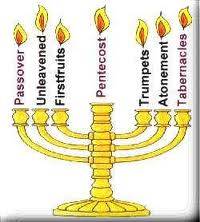
Because these feasts all point to a future fulfilment in the Messiah they are in their original form described as “a shadow of things to come, but the substance is of Christ” (Col. 2:17). This statement by Paul literally means: “The feasts are prophetic indications of future events that will be fulfilled during the time of the Messiah.” All seven are Messianic feasts; the first group of four were all fulfilled during events related to the first coming of Christ, ending with the outpouring of the Holy Spirit, while the last three refer to events associated with His second coming. The long period between the two groups of feasts prophetically refers to the church dispensation which elapses between the first and second comings of the Lord Jesus.
A very important aspect of these feasts which should always be remembered is that, in their original shadowy form, they were given to Israel to observe in order to prepare them on the coming of the Messiah. However, in the fulfilled, New Testament form of the feasts they are relevant to all people on earth as they contain a blueprint of God’s plan of salvation for all of humanity. On the moment when the first of the seven feasts was fulfilled, the perspective shifted from Israel to the entire world. The Lord commanded His disciples that the Gospel message should be proclaimed to all people as it was equally meant for them – nobody was to be excluded. The seven feasts and their New Testament fulfilment are as follows:
1. The Passover
Passover is celebrated in Nisan, which is the first month on Israel’s religious calendar. That is the spring month in northern hemisphere – usually March on the Gregorian calendar. Israel has a lunar calendar in which every month starts with the new moon. However, apart from their religious calendar they also have a civil calendar which starts six months later in the autumn on 1 Tishri (usually in September). That day is referred to as the Rosh Hashanah, or New Year. On the religious calendar, Tishri is the seventh month. According to Exodus 12:2, the Lord changed the order of the months on Israel’s calendar during their exodus from Egypt, resulting in Nisan becoming the first month. The spring month symbolises the beginning of a new life after Israel’s deliverance from four centuries of Egyptian exile and bondage to sin. However, Israel did not relinquish their civil calendar which begins on Rosh Hashanah, and still uses both calendars.
The first of the annual feasts begins with the full moon in Nisan (two weeks after the new moon it is always full moon): “On the fourteenth day of the first month at twilight is the Lord’s Passover” (Lev. 23:5). The establishment of the Passover was the first guideline for God’s plan of salvation that would be fulfilled 1 500 years later when the Messiah was crucified for the sins of the world: “Your lamb shall be without blemish, a male of the first year. ... Now you shall keep it up until the fourteenth day of the same month. Then the whole assembly of the congregation of Israel shall kill it at twilight. They shall take some of the blood, and put it on the two doorposts and on the lintel of the houses where they eat it. ... For I will pass through the land of Egypt on that night and will strike all the first-born. ... Now the blood shall be a sign for you on the houses where you are. And when I see the blood, I will pass over you; and the plague shall not be on you to destroy you” (Ex. 12:5‑7,12-13).
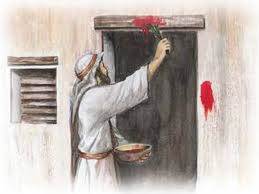
The seven feasts begin with the slaying of a lamb. The fulfilment of the Passover was the crucifixion of the spotless Lamb of God who was incarnated in the fullness of time to lay down His life for us. Peter referred to the priceless sacrifice of the Lamb when he said: “...you were not redeemed with corruptible things, like silver or gold, from your aimless conduct received by tradition from your fathers, but with the precious blood of Christ, as of a lamb without blemish and without spot” (1 Pet. 1:18-19). Paul added to this: “In Him we have redemption through His blood, the forgiveness of sins, according to the riches of His grace” (Eph. 1:7).
Jesus was crucified on Friday, the 14th day of Nissan (in April 32), on the day of that year’s Passover celebrations. He died at three in the afternoon (Mark 15:34‑37), on exactly the same hour when the Passover lambs were slaughtered in Egypt. Pilate was surprised that Jesus had died so quickly, and granted permission that He could be buried (Mark 15:42‑45). He was buried before the evening and the onset of the Sabbath when nobody could be buried (Luke 23:52‑ 54; John 19:31). According to the Jews’ system of inclusive reckoning, a part of a day is also described as a full day, and for that reason it is not inevitable that 72 hours should elapse between Christ’s crucifixion on a Friday afternoon and His resurrection early on a Sunday morning.
Since the moment when Christ paid the ransom for our sins, the fulfilment of the seven festivals is of significance to all people on earth. Even before the crucifixion of Jesus, John the Baptist pointed at Him and said: “Behold! The Lamb of God who takes away the sin of the world!” (John 1:29). He would not only die for Israel’s sins but for the sins of the whole world. After His atoning death He would further reveal Himself by means of the remaining six feasts.
2. The Feast of the Unleavened Bread
The second feast follows without interruption on the first one and is a direct consequence of it: “And on the fifteenth day of the same month is the Feast of Unleavened Bread to the Lord; seven days you must eat unleavened bread” (Lev. 23:6-7).
According to John 19:31, the Sabbath directly after the crucifixion of Jesus was an important day. That was because it was not only the weekly Sabbath, but also the first day of the Feast of Unleavened Bread. For the Jews this was a feast of soul‑searching and cleansing. As leaven is a symbol of sin, eating unleavened bread would mean that the believer was honestly committed to live a holy life. Therefore, they had to remove all the leaven from their houses for the duration of the feast. This rule was to be applied so stringently that they even had to sweep out crumbs of leavened bread and burn it outside (Ex. 12:15). Followers of the Messiah are likewise expected to cleanse themselves spiritually from the leaven of sin and unrighteousness.
We should also identify with Christ as the unleavened bread of life in such a way that we will abandon all the leaven of sin. Paul says: “Your glorying is not good. Do you not know that a little leaven leavens the whole lump? Therefore purge out the old leaven, that you may be a new lump, since you truly are unleavened. For indeed Christ, our Passover, was sacrificed for us. Therefore let us keep the feast, not with old leaven, nor with the leaven of malice and wickedness, but with the unleavened bread of sincerity and truth” (1 Cor. 5:6‑8).
The Jews had to search their houses on their knees for traces of yeast. In the same way we must search our lives in the light of God’s Word, and when sin is discovered it should be confessed and forsaken (Prov. 28:13). David said, “Search me, o God, and know my heart; try me, and know my anxieties; and see if there is any wicked way in me, and lead me in the way everlasting” (Psalm 139:23-24).
3. The Feast of the Firstfruits
The subsequent feasts of Israel are all associated with different phases of the annual gathering of the harvest, and in each case a deep spiritual application is made. The third one is known as the Feast of Firstfruits: “Speak to the children of Israel, and say to them: When you come into the land which I give to you, and reap its harvest, then you shall bring a sheaf of the firstfruits of your harvest to the priest. He shall wave the sheaf before the Lord, to be accepted on your behalf; on the day after the Sabbath the priest shall wave it” (Lev. 23:10-11).

Because Israel is a winter rainfall area, the first sheaf of grain was given to the Lord as a sacrifice in the spring. This sheaf was to be offered on a Sunday, and it was a very important event since this celebration had significance far beyond the physical act of gathering the harvest – it was conducted to render the people of Israel acceptable to the Lord.
The Feast of the Firstfruits was usually celebrated close to the time of the Passover. The grain was nearly ready to be harvested when the Jews left Egypt (Ex. 9:31). This act adds to the meaning of the spring month of Nissan as the beginning of a new life. Not only did Jesus rise from the grave in that month, but the Jews were also led out of Egypt in Nissan. In the year 32, the ceremony was conducted on Sunday morning – the day on which Jesus rose from the grave. It was the day after the Sabbath: “Now when He rose early on the first day of the week, He appeared first to Mary Magdalene" (Mark 16:9).
The seed that had fallen in the ground (the death and burial of Jesus) yielded its first fruit on that Sunday morning when Jesus rose from the grave. It also indicated the beginning of the harvest of souls, for the whole harvest that would be gathered after that, would be acceptable to God by virtue of the death and resurrection of Jesus. Furthermore, it signalled the transition from the old covenant to the new. That is why it strictly had to be conducted on a Sunday, the first day of the week and symbolically the beginning of a new dispensation. That is why the celebration of the Sabbath was changed from the seventh to the first day of the week in the new dispensation of grace. Because of the finished work of the Messiah, we can celebrate resurrection day every Sunday. We have entered into the new covenant with God through Him, and are therefore active partakers in the resurrection life of Jesus our Lord: “And if Christ is not risen, your faith is futile; you are still in your sins! ... But now Christ is risen from the dead, and has become the firstfruits of those who have fallen asleep” (1 Cor. 15:17, 20).
4. Pentecost
Pentecost is also referred to as the Feast of the Weeks because it was celebrated exactly seven weeks after the Feast of Firstfruits: “And you shall count for yourselves from the day after the Sabbath, from the day that you brought the sheaf of the wave offering: Seven Sabbaths shall be completed. Count fifty days to the day after the seventh Sabbath; then you shall offer a new grain offering to the Lord. You shall bring from your habitations two wave loaves of two-tenths of an ephah. They shall be of fine flour; they shall be baked with leaven. They are the firstfruits to the Lord” (Lev. 23:15‑17).
Only the first and the fiftieth days of the Feast of the Firstfruits were celebrated. On the fiftieth day, a Sunday, two leavened loaves had to be given to God as a wave offering. Remember that leaven is the symbol of sin, therefore these two loaves do not point to the Messiah. They must be seen as prophetic symbols of two groups of believers – those in Israel and in the Gentile world. The believers from Israel and the nations are despite their salvation not sinless and perfect, and must be consecrated to the Lord. That is the meaning of this ceremony.
The Jews celebrate the onset of the dispensation of the law at Pentecost (derived from the Greek word pentecostos, meaning fiftieth). They believe that the people of Israel arrived at Sinai fifty days after their departure from Egypt. It was there that God gave Moses the law (Ex. 19:1‑3). It was for the celebration of this feast that the Jews from all over the world gathered in Jerusalem on the day when the Holy Spirit descended (Acts 2). They did not realise that the Passover, the Feast of the Unleavened Bread and the Feast of the Firstfruits had already been fulfilled through the atoning death and resurrection of Jesus; therefore, they did not realise that the dispensation of the law had been consummated.
The new dispensation of grace, ministered by the Holy Spirit, was a further progression from the dispensation of the law, “for the code of the law kills, but the Holy Spirit makes alive” (2 Cor. 3:6). 3 000 people died at Sinai because they were punished under the law for worshipping an idol (Ex. 32:28). On the day of Pentecost, of which we read in the New Testament, 3 000 people were saved when the new dispensation was introduced by the pouring out of the Holy Spirit (Acts 2:41).
The beginning of the dispensation of the church at Pentecost indicates that it fulfils, ends and replaces the dispensation of the law. This was another example of God’s perfect timing, since 40 days passed between the resurrection and ascension of Jesus, and another ten days while the disciples were praying and waiting for the Holy Spirit to be poured out. This total of 50 days is exactly the same as the time that expired between the two wave offerings of the Feast of the Firstfruits. We still recognise this chronology, as we celebrate the resurrection on the Sunday after Good Friday, the ascension 40 days later on a Thursday, and Pentecost ten days later, again on a Sunday.
It is also interesting that Pentecost is not celebrated in isolation. It forms part of the preceding feasts and is intimately linked to the Passover festival 50 days earlier. For this reason the outpouring of the Holy Spirit must always be seen in its close association with the whole series of events that include the death, resurrection and ascension of the Lord Jesus Christ.
On the day when the Holy Spirit was poured out, the disciples spoke in various tongues which were understood by people who came from fifteen different countries or linguistic groups, despite the fact that the disciples themselves did not know these languages or dialects (Acts 2:6-12). This was clearly a special gift that functioned during the important transition from an Israel oriented gospel to a gospel message aimed at the spiritual needs of all nations and peoples on earth. The fulfilment of the seven feasts is closely associated with the salvation of all people, and with this end in view it is imperative that all of them should be informed in their own language on the salvation of lost humanity.
Gathering the harvest
After the Feast of the Firstfruits a period of four months follows, during which the harvest is gathered. The last three feasts are then celebrated after the harvest, in the seventh month. The long time-span between these two groups of feasts has prophetic significance. It refers to the dispensation of the church, as in that time the harvest of the kingdom of heaven is to be gathered. Those working for God must give all they have to complete their task within the available time: “Do you not say: There are still four months and then comes the harvest? Behold, I say to you, lift up your eyes and look at the fields, for they are already white for harvest!” (John 4:35). On another occasion Jesus said: “The harvest truly is great, but the labourers are few; therefore pray the Lord of the harvest to send labourers into His harvest” (Luke 10:2).
Jesus said to agnostic Jews who rejected Him at His first coming: “You shall see Me no more till you say, Blessed is He who comes in the name of the Lord!” (Matt. 23:39). The conjunction “till” means “up to the time when...”, and therefore clearly implies an end to the long period of Israel’s national unbelief. When Christ returns He will set foot on the Mount of Olives in Jerusalem (Zech. 14:4-5), and that clearly suggests that the biblical inhabitants of Jerusalem (the Jews) will be back in their land. During this second meeting they will not reject Him again but fully accept Him. They will look on Him whom they have pierced and bitterly grieve for Him (Zech. 12:10). The entire remnant of Israel will then be reconciled with Him.
The Lord Jesus again used the conjunction “till” when He said to the Jewish leaders: “And Jerusalem will be trampled by Gentiles until the times of the Gentiles are fulfilled” (Luke 21:24). The restoration of Israel and Jerusalem will reach its final stage when the Messiah appears on the Mount of Olives at the end of the tribulation period, after the dispensation of world evangelisation. He will pass through the Valley of Kidron and the eastern gate which is still closed, and enter the Temple Mount where He will restore the fallen kingdom of David (Luke 1:32; Acts 15:16-17). On that day the trampling of Jerusalem will finally come to an end, including the prevailing Muslim control over the Temple Mount.
Paul also referred to this long period of Israel’s spiritual hardening, and indicated that it would coincide with the dispensation of world evangelisation after which Israel, as a nation, will be saved. He said that “blindness in part has happened to Israel until the fullness of the Gentiles has come in. And so all Israel will be saved, as it is written: The Deliverer will come out of Zion, and He will turn away ungodliness from Jacob” (Rom. 11:25-26).
Israel’s progressive end-time restoration is a clear indication that the times of the Gentiles, when the entire non-Jewish world is evangelised, is nearing its end. After that, the last three festivals will be fulfilled when the kingdom of God is physically established on earth.
5. The Feast of Trumpets
The seventh month marks the end of the harvest, or virtually the end of it, as only the aftercrop will then be reaped: “Speak to the children of Israel, saying: In the seventh month, on the first day of the month, you shall have a Sabbath-rest, a memorial of blowing of trumpets, a holy convocation” (Lev. 23:24). At different times of this day, as well as the 2nd day of Tishri, orthodox Jews blow rams’ horns (shofars) in their synagogues. On the second day, at dusk, the final trumpet is blown to announce the ingathering of the harvest. This is not the last of all soundings of the trumpet but the final trumpet of the harvest festival.
The Feast of Trumpets will be fulfilled when Jesus Christ gathers the heavenly harvest among all nations. Paul says, “For the Lord Himself will descend from heaven with a shout, with the voice of an archangel, and with the trumpet of God. And the dead in Christ will rise first. Then we who are alive and remain shall be caught up together with them in the clouds to meet the Lord in the air. And thus we shall always be with the Lord. Therefore comfort one another with these words” (1 Thess. 4:16-18).
In Israel’s programme, the first two days of the seventh month are followed by the seven awesome days when religious Jews humble themselves through fasting, confession of their sins, and doing good to others, thereby trying to secure the blessings of God. These acts are performed as preparation for the Day of Atonement which is celebrated on the 10th day of Tishri, in the hope that the Lord will not reject and judge them but declare them acceptable to Him.
These seven days prophetically refer to the seven years of the tribulation period, which will be Daniel’s 70th year-week. During times of great affliction and trouble, Israel and the nations will either seek and accept the true Messiah, or, to their own downfall and ruin, they will conclude a covenant with the false messiah.
6. The Day of Atonement
The Day of Atonement is the most important religious feast in Israel. It was also the only day of the year during which the High Priest was permitted to enter into the Holy of Holies to atone for the sins of the nation: “Also the tenth day of this seventh month shall be the Day of Atonement. It shall be a holy convocation for you; you shall afflict your souls, and offer an offering made by fire to the Lord” (Lev. 23:27).
This day will prophetically be fulfilled when the Messiah comes again to bring an end to all sins and establish eternal righteousness in Israel (Dan. 9:24). On this very dramatic day after the great tribulation, a remnant of the nations will also be reconciled with Christ. According to Matthew 24:29-30, all the tribes of the earth will mourn for their sins when they see the Son of Man coming on the clouds of heaven.
Jesus will return on the last day of the seven years of tribulation, and set foot on the Mount of Olives. All eyes will see Him, including those who pierced Him (Rev. 1:7). In Israel it will be a day of repentance and conversion: “In that day a fountain shall be opened for the house of David and for the inhabitants of Jerusalem, for sin and for uncleanness” (Zech. 13:1).
To us as Christians the crucifixion was our Day of Atonement, but the multitude of unsaved people in Israel and the nations will only accept Jesus’ atoning sacrifice during His second coming and grieve for their sins. Their biggest sin will be that of rejecting Him as the Saviour of the world.
7. The Feast of Tabernacles
“The fifteenth day of this seventh month shall be the Feast of Tabernacles for seven days to the Lord. ... You shall dwell in booths for seven days. All who are native Israelites shall dwell in booths, that your generations may know that I made the children of Israel dwell in booths when I brought them out of the land of Egypt: I am the Lord your God” (Lev. 23:34, 42‑43).
This is a joyous feast that is celebrated after the harvest to thank the Lord for all His goodness. He is also praised for leading His people through the dangers of the wilderness, and setting them free from the Egyptian bondage. The feast has a definite future perspective, as it clearly reflects the coming of the Messiah. When He comes, the final harvest of the kingdom of heaven will have been gathered.
On the first day of the Feast of Tabernacles, the rabbis read Zechariah 14 in the synagogues. This chapter deals with the following themes:
· the coming of the Messiah and all His saints (verses 4, 5);
· the kingship of the Messiah (verse 9);
· the exaltation of Jerusalem (verses 8‑11);
· the destruction of Israel’s enemies (verses 12‑15); and
· the compulsory participation of the other nations in the Feast of Tabernacles in Jerusalem during the Messiah’s reign of peace (verses 16‑18).
The return of Jesus will be the final fulfilment of the Feast of Tabernacles. Then we will all praise God for having saved us from the bondage of sin, and for protecting us in this dangerous and evil world. We will thank and praise Him for the great harvest of believers that has been gathered into the kingdom of heaven. Great joy will prevail when the Messiah’s millennial reign is instituted with Jerusalem as the capital city of the world!
Satan will be bound and sin and iniquity will no longer dominate the lives of people. In Jeremiah 3:17 the Lord says, “At that time Jerusalem shall be called The Throne of the Lord, and all the nations shall be gathered to it, to the name of the Lord, to Jerusalem; they shall walk no more after the stubbornness of their evil heart.”
“Yes, many peoples and strong nations shall come to seek the Lord of hosts in Jerusalem, and to pray before the Lord. Thus says the Lord of hosts: In those days ten men from every language of the nations shall grasp the sleeve of a Jewish man, saying, Let us go with you, for we have heard that God is with you” (Zech. 8:22-23).
Personal experience
How do you experience the fulfilment of the feasts in the Messiah? Every saved person begins his or her pilgrimage at the foot of the cross, where the blood of the Lamb was shed for sinners like you and me. When we take our refuge in Him, our sins are forgiven and we are clothed with the garments of righteousness that only Jesus can give us. From there we progress to the experience of Pentecost, when the Holy Spirit endows us with His power to become harvesters for the kingdom of heaven. When the Lord returns with the sounding of a trumpet to gather the final harvest for the glorious revelation of His kingdom, He wants to find us out there in the fields, busy inviting people into His kingdom.
Those who remain behind when the Lord takes away His children will face the greatest tribulation of all time under the tyranny of the Antichrist. When the saints return with Christ after seven years, the empire of the false messiah will be destroyed during the battle of Armageddon. That judgement will be followed by the establishment of the Messiah’s kingdom on earth. If we wish to share in the final triumph of the Messiah, we have to follow Him all the way and also experience rejection and persecution by the world. It is only after we have suffered with Christ that we will also be glorified with Him and reign with Him (Rom. 8:17; Phil. 1:28-29; 2 Thess. 1:5; 2 Tim. 2:12; 1 Pet. 5:10).
This is not an easy journey, and some people turn back along the way. They simply cannot bear to carry the weight of the cross all the way to the end of the narrow road and rather opt for an easy way out, by claiming the benefits and trouble‑free life of experiencing the Millennium right now. In so doing, they follow the teachings of the prosperity gospel and kingdom now theology. They are those who are not prepared to be crucified to the world, or to let go of their worldliness and let it be crucified to them. They are not spiritually strong enough to bear the loneliness and sacrifices that may be required of them during their walk in the service of the Lord. They find it hard to accept the fact that true believers are strangers and pilgrims in a world which lies in the power of the evil one (Heb. 11:13; 1 John 5:19). Will their faith prevail under circumstances of persecution?
In Egypt, salvation was only granted to those who had the faith to seek protection under the blood of the lamb. They embarked on a journey that, although dangerous and fraught with trials and tribulations, led to the Promised Land. Are you also on this journey and are you making progress in your spiritual life? The annual feasts, as expressions of our faith in the Messiah, are meant to be times of refreshing in the presence of the Lord (Acts 3:19). It strengthens your vision and commitment, while you are once again endued with power from on high to fulfil your calling as a follower of the Messiah in an evil world.
A testimony to Israel
Apart from our own spiritual edification through the fulfilment of the seven feasts, we should also reach out to Israel and indicate to them on how Jesus of Nazareth has fulfilled the first four feasts at the time of His first coming and also through the outpouring of the Holy Spirit shortly after His ascension. The seven feasts are all Messianic feasts by which Israel is called to be a truly Messianic people. This is a natural consequence of the fact that the Messiah was born in the house of David and was commonly known as the Son of David. When He comes again, He will rule from the throne of David in Jerusalem and at that time also fulfil the last three feasts.
Even though Messianic Jews in Israel may make themselves unpopular by being witnesses of the Messiah, it nevertheless has to be done. Moses was mindful of Israel’s Messianic calling and was already during those early years prepared to suffer for the Messiah: “By faith Moses, when he became of age, refused to be called the son of Pharaoh’s daughter, choosing rather to suffer affliction with the people of God than to enjoy the passing pleasures of sin, esteeming the reproach of Christ [the Messiah] greater riches than the treasures in Egypt; for he looked to the reward” (Heb. 11:24-26).
The Lord Jesus also reminds Israel of the following fact: “I am the Root and the Offspring of David, the Bright and Morning Star” (Rev. 22:16). He is the Alpha and the Omega, their beginning and their end. Israel’s origin is in Him, and the final fulfilment of their upward call in God’s kingdom can only be realised if they are fully reconciled with Him.